
Crypto security starts with one serious question:
Who controls your private keys?
If your coins are on an exchange, the exchange may control the private keys. That can be convenient for trading, but it also creates platform risk. If the exchange freezes withdrawals, gets hacked, faces legal problems, or your account is compromised, your crypto may be at risk.
A hardware wallet gives you a different approach. It helps you store private keys offline and sign transactions from a separate physical device. This makes hardware wallets one of the strongest options for long-term crypto storage.
For Bitcoin holders, Ethereum investors, altcoin users, NFT collectors, and DeFi users, hardware wallets can reduce online attack risk. They are especially useful if you plan to hold crypto for months or years instead of trading daily.
But hardware wallets are not magic. They protect private keys, but they do not protect you from every mistake. If you lose your seed phrase, sign a malicious transaction, buy a fake device, or enter your recovery phrase into a fake app, you can still lose funds.
That is why choosing the right hardware wallet and using it correctly matters.
Ledger says its hardware wallets store private keys in a secure offline environment and use a Secure Element chip with Ledger’s operating system to help protect crypto and NFTs. Trezor describes its hardware wallets as cold-storage devices that keep crypto offline and away from hackers, malware, and other online threats.
This guide compares the best hardware wallets for long-term crypto security, explains cold storage, seed phrase backup, supported assets, common scams, and how to choose the right device.
Important Disclaimer
This article is for educational and informational purposes only. It is not financial, investment, tax, legal, or cybersecurity advice. Cryptocurrency is risky, and self-custody mistakes can cause permanent loss. Always verify wallet details from official sources and never share your seed phrase or private keys.
What Is a Hardware Wallet?
A hardware wallet is a physical device that stores your crypto private keys offline.
It does not store your Bitcoin or Ethereum “inside” the device. Your crypto stays on the blockchain. The hardware wallet stores the keys needed to control that crypto.
A hardware wallet helps you:
- Generate private keys offline
- Store recovery phrase securely
- Sign transactions
- Verify receiving addresses
- Approve outgoing transactions
- Connect with wallet apps
- Manage Bitcoin and altcoins
- Use DeFi more safely
- Protect long-term holdings
- Reduce malware risk
Ledger explains that crypto wallets store keys and allow users to sign transactions, generate addresses, initiate transfers, track balances, manage crypto, and interact with dApps.
The main benefit is that your private keys are not stored directly on your internet-connected phone or computer.
Hardware Wallet vs Software Wallet
A software wallet is installed on a phone, browser, or computer. A hardware wallet is a separate physical device.
| Wallet Type | Main Use | Security Level | Best For |
|---|---|---|---|
| Mobile wallet | Daily use | Medium | Small balances |
| Browser wallet | DeFi and NFTs | Medium | Web3 activity |
| Desktop wallet | Portfolio control | Medium | Intermediate users |
| Exchange wallet | Trading | Depends on exchange | Active traders |
| Hardware wallet | Long-term storage | High | Serious holders |
| Multisig wallet | Shared custody | High, but complex | Teams and businesses |
Software wallets are easier to use, but they are exposed to online risks. Hardware wallets are safer for long-term storage because keys are isolated from normal internet-connected devices.
Hot Wallet vs Cold Wallet
A hot wallet is connected to the internet.
Examples:
- MetaMask
- Trust Wallet
- Coinbase Wallet
- Phantom
- Exodus
- Exchange wallets
A cold wallet keeps private keys offline or away from regular online exposure.
Examples:
- Ledger
- Trezor
- Coldcard
- Keystone
- SafePal hardware wallet
- Air-gapped signing devices
- Multisig cold storage
For long-term crypto security, cold storage is usually better. But hot wallets are still useful for small amounts, DeFi activity, and daily transactions.
A smart setup is:
- Keep trading funds on an exchange
- Keep small Web3 funds in a hot wallet
- Keep long-term holdings in a hardware wallet
Best Hardware Wallets for Long-Term Crypto Security
Below are some of the best hardware wallets to compare in 2026.
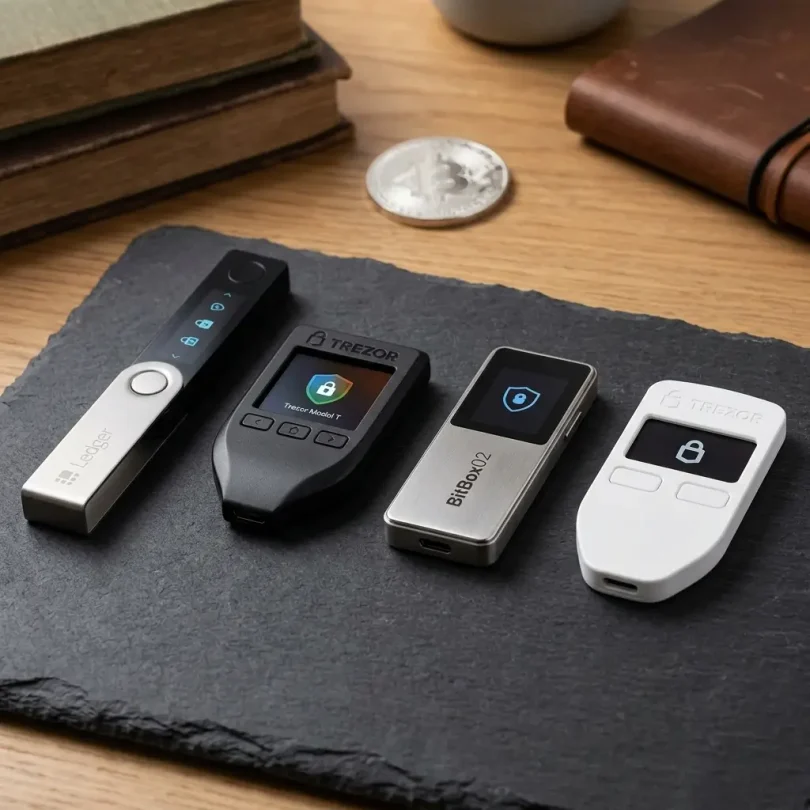
1. Ledger Nano X
Best for: Overall hardware wallet users and multi-asset storage
Good for: Bitcoin, Ethereum, altcoins, NFTs, DeFi users
Main strength: Broad asset support and mobile-friendly hardware wallet experience
Ledger Nano X is one of the most popular hardware wallets for long-term crypto storage. It supports many crypto assets through Ledger Wallet/Ledger Live and compatible third-party apps.
Ledger’s official supported-assets page lets users search supported coins and tokens, and Ledger says its devices help protect BTC, ETH, XRP and more.
Key Features
- Hardware private-key storage
- Bluetooth support
- Mobile and desktop use
- Ledger Wallet / Ledger Live app
- Bitcoin and altcoin support
- NFT support
- DeFi wallet integrations
- Secure Element chip
- Recovery phrase backup
- PIN protection
- Multi-account support
Why Ledger Nano X Is Good
Ledger Nano X is strong for users who want one hardware wallet for many crypto assets. It works well for people who hold Bitcoin, Ethereum, stablecoins, altcoins, NFTs, and tokens across multiple chains.
Its mobile support can also be convenient for users who want hardware wallet protection without relying only on a desktop computer.
Best Fit
Ledger Nano X is best for serious crypto holders who want broad asset support and mobile compatibility.
Possible Downsides
Ledger devices require careful recovery phrase security. Also, users must buy only from official sources. A 2026 Tom’s Hardware report described a counterfeit Ledger Nano S+ that was designed to steal seed phrases and PINs through fake software, showing why official purchasing is critical.
2. Ledger Nano S Plus
Best for: Budget Ledger users and long-term altcoin storage
Good for: Bitcoin, Ethereum, stablecoins, altcoins, NFTs
Main strength: Lower-cost Ledger hardware wallet with strong asset support
Ledger Nano S Plus is a more affordable Ledger option than Nano X. It is a strong choice for users who want hardware wallet security but do not need Bluetooth.
Key Features
- Hardware wallet storage
- USB connection
- Secure Element chip
- Ledger Wallet / Ledger Live support
- Bitcoin and altcoin support
- NFT support
- PIN protection
- Recovery phrase backup
- Multiple app support
- Good value for long-term holders
Why Ledger Nano S Plus Is Good
Nano S Plus is a practical choice for long-term holders who mainly use a desktop computer and do not need mobile Bluetooth features.
It provides strong cold-storage style security at a lower price than premium devices.
Best Fit
Ledger Nano S Plus is best for budget-conscious investors who want Ledger’s ecosystem and broad crypto support.
Possible Downsides
It does not offer the same mobile convenience as Nano X. Users should also be careful about fake devices and fake Ledger apps. TechRadar reported that fake Ledger Live apps have been used to steal seed phrases, and Ledger’s CTO warned users to download Ledger Live only from the official website and never share seed phrases.
3. Trezor Safe 5
Best for: Open-source-focused users and premium Trezor experience
Good for: Bitcoin, Ethereum, major altcoins, long-term holders
Main strength: Trezor security reputation with modern device experience
Trezor Safe 5 is a modern Trezor hardware wallet designed for secure self-custody. Trezor’s official website describes its hardware wallets as cold-storage wallets for crypto security and financial independence.
Trezor Suite supports thousands of coins and tokens, including Bitcoin, Ethereum, Solana, Cardano, ERC-20 tokens, and more, according to Trezor’s app information.
Key Features
- Hardware wallet storage
- Trezor Suite app
- Touchscreen-style user experience on newer models
- Bitcoin and altcoin support
- Recovery phrase backup
- PIN protection
- Passphrase support
- Open-source design philosophy
- Third-party wallet compatibility
- Secure transaction confirmation
Why Trezor Safe 5 Is Good
Trezor is popular with users who value transparency and self-custody. The Safe 5 is a strong option for people who want a modern Trezor device for long-term crypto storage.
It is especially attractive for users who care about open-source security culture and want a reputable hardware wallet brand.
Best Fit
Trezor Safe 5 is best for serious holders who want a premium Trezor device and a self-custody-focused wallet experience.
Possible Downsides
Some assets may require third-party wallet integrations. Always check official asset support before buying.
4. Trezor Safe 3
Best for: Value-focused hardware wallet buyers
Good for: Bitcoin, Ethereum, major altcoins, cost-conscious users
Main strength: Trezor security at a more accessible price
Trezor Safe 3 is a strong value option for people who want Trezor hardware wallet security without paying for the most premium model.
Coin Bureau’s 2026 hardware wallet comparison described Trezor Safe 3 as a strong value-for-security option with open-source credibility at a more accessible price.
Key Features
- Hardware wallet storage
- Trezor Suite support
- Bitcoin and altcoin support
- Recovery phrase backup
- PIN protection
- Passphrase support
- Compact device
- Value pricing
- Self-custody focus
Why Trezor Safe 3 Is Good
Trezor Safe 3 is good for users who want hardware wallet protection without paying premium pricing. It can be a strong entry point for self-custody.
Best Fit
Trezor Safe 3 is best for beginners and intermediate holders who want a reputable hardware wallet at a lower cost.
Possible Downsides
It may not offer the same user experience or premium features as Trezor Safe 5.
5. Coldcard
Best for: Bitcoin-only cold storage
Good for: Bitcoin maxis, advanced self-custody users, long-term BTC holders
Main strength: Bitcoin-focused offline security workflows
Coldcard is a Bitcoin-focused hardware wallet known for advanced cold-storage workflows. It is often preferred by serious Bitcoin users who want air-gapped signing and deep control.
Coin Bureau’s 2026 list highlighted Coldcard Q as best for Bitcoin, describing it as built for serious Bitcoin self-custody with advanced offline workflows and strong anti-coercion tools.
Key Features
- Bitcoin-only focus
- Air-gapped signing workflows
- MicroSD transaction signing
- PIN security
- Seed phrase backup
- Advanced Bitcoin features
- Multisig support
- Offline transaction signing
- Strong self-custody controls
Why Coldcard Is Good
Coldcard is not designed to be the easiest wallet for casual altcoin users. It is designed for serious Bitcoin storage.
Bitcoin-only users often prefer focused tools because they reduce complexity and avoid unnecessary altcoin features.
Best Fit
Coldcard is best for advanced Bitcoin holders who want serious cold storage and do not need altcoin support.
Possible Downsides
Coldcard can be too technical for beginners. It is not ideal for users who want one wallet for Ethereum, Solana, NFTs, and many altcoins.
6. SafePal S1
Best for: Budget air-gapped hardware wallet users
Good for: Mobile users, multi-chain holders, budget-conscious investors
Main strength: Affordable hardware wallet with QR-based signing
SafePal S1 is a hardware wallet that uses QR-code-based signing workflows. It is designed to keep private keys offline while connecting to the SafePal app.
Key Features
- Hardware wallet storage
- Air-gapped QR signing
- Mobile app connection
- Multi-chain support
- Token support
- DEX and DeFi access through app ecosystem
- PIN protection
- Recovery phrase backup
- Affordable price point
Why SafePal S1 Is Good
SafePal S1 can be attractive for users who want a lower-cost hardware wallet and mobile-first experience. The QR signing workflow is useful because it reduces direct physical connection to a computer.
Best Fit
SafePal S1 is best for budget users who want hardware wallet storage with a mobile app workflow.
Possible Downsides
Users should compare asset support, firmware update process, and long-term brand trust against Ledger and Trezor.
7. Keystone
Best for: Air-gapped wallet users and QR transaction signing
Good for: DeFi users, multisig users, security-conscious holders
Main strength: Large-screen air-gapped transaction verification
Keystone is a hardware wallet brand focused on air-gapped signing and QR-based workflows. It is often used by people who want clear transaction review and compatibility with popular software wallets.
Key Features
- Air-gapped signing
- QR code workflow
- Large screen on some models
- Fingerprint/PIN options depending on model
- Multi-chain support
- DeFi wallet compatibility
- Bitcoin and Ethereum support
- Recovery phrase backup
- Transaction verification
Why Keystone Is Good
Keystone can be useful for users who want to verify transaction details on a larger device screen instead of a tiny display. This can help reduce signing mistakes.
Best Fit
Keystone is best for security-conscious users who want air-gapped signing and clear transaction review.
Possible Downsides
It may require more learning than a simple Ledger or Trezor setup. Availability and model features should be checked from the official site.
8. BitBox02
Best for: Simple secure storage and Bitcoin-focused option
Good for: Bitcoin users, Ethereum users, privacy-conscious holders
Main strength: Clean design and security-focused setup
BitBox02 by Shift Crypto is another respected hardware wallet option. It is known for a minimal design and a strong focus on secure self-custody.
Key Features
- Hardware wallet storage
- Bitcoin-only edition available
- Multi-edition option
- MicroSD backup option
- USB-C connection
- Desktop app
- Open-source elements
- Secure chip
- Simple design
Why BitBox02 Is Good
BitBox02 may appeal to users who want a clean and simple hardware wallet without too many extra features. The Bitcoin-only version is attractive for BTC-focused users.
Best Fit
BitBox02 is best for users who want a simple security-focused hardware wallet, especially Bitcoin-focused holders.
Possible Downsides
It may not have the same broad mainstream recognition as Ledger and Trezor.
9. Tangem Wallet
Best for: Card-style hardware wallet simplicity
Good for: Beginners who dislike seed phrases, mobile users, small-to-medium portfolios
Main strength: NFC card-based wallet experience
Tangem is a card-style hardware wallet that uses NFC with a mobile app. It is different from traditional hardware wallets because it is shaped like a card and focuses on simple mobile use.
Key Features
- NFC card wallet
- Mobile app workflow
- Multi-card backup setup
- No battery
- Portable design
- Multi-chain support
- Beginner-friendly experience
- Private key generation inside card
Why Tangem Is Good
Tangem can be useful for beginners who want hardware-wallet-like protection without a traditional USB device. Its card-based design is simple and portable.
Best Fit
Tangem is best for mobile users who want a simple card-style hardware wallet experience.
Possible Downsides
Some advanced users prefer traditional seed phrase control and open recovery standards. Beginners should fully understand backup and recovery before using any seedless or card-based wallet design.
10. GridPlus Lattice1
Best for: Advanced wallet management and SafeCard flexibility
Good for: Advanced users, DeFi users, multi-wallet management
Main strength: Large-screen transaction verification and SafeCard system
GridPlus Lattice1 is a premium hardware wallet system with a larger screen and SafeCard-based wallet flexibility.
Coin Bureau’s 2026 comparison highlighted GridPlus Lattice1 as best for unlimited wallets because of its large-screen wallet management and SafeCard flexibility.
Key Features
- Large screen
- SafeCard system
- Hardware transaction signing
- Multi-wallet support
- DeFi compatibility
- Ethereum-focused workflows
- Secure key storage
- Advanced user controls
Why GridPlus Lattice1 Is Good
GridPlus Lattice1 is attractive for advanced users who want a larger device, stronger transaction visibility, and flexible wallet management.
Best Fit
GridPlus Lattice1 is best for advanced users managing multiple wallets or complex DeFi workflows.
Possible Downsides
It is not the simplest or cheapest option. Beginners may prefer Ledger, Trezor, or Tangem.
Quick Comparison Table
| Hardware Wallet | Best For | Main Strength | Best User Type |
|---|---|---|---|
| Ledger Nano X | Multi-asset storage | Mobile + broad asset support | Serious holders |
| Ledger Nano S Plus | Budget Ledger users | Lower-cost Ledger security | Long-term altcoin holders |
| Trezor Safe 5 | Premium Trezor users | Modern open-source-focused experience | Security-focused holders |
| Trezor Safe 3 | Value buyers | Trezor security at lower price | Beginners/intermediate users |
| Coldcard | Bitcoin-only storage | Advanced offline BTC workflows | Serious Bitcoin holders |
| SafePal S1 | Budget air-gapped wallet | QR signing and mobile app | Budget multi-chain users |
| Keystone | Air-gapped security | Large-screen transaction review | DeFi/security users |
| BitBox02 | Simple secure storage | Clean design and BTC option | Minimalist holders |
| Tangem | Card-style simplicity | NFC mobile experience | Beginners/mobile users |
| GridPlus Lattice1 | Advanced wallet management | Large screen + SafeCards | Advanced DeFi users |
Best Hardware Wallet by User Type
Best Hardware Wallet for Beginners
Ledger Nano S Plus, Trezor Safe 3, Tangem
Beginners need a wallet that is not too complicated. Ledger and Trezor have strong documentation, while Tangem offers a simpler card-style experience.
Best Hardware Wallet for Bitcoin
Coldcard, Trezor, BitBox02 Bitcoin-only edition
Bitcoin holders often prefer focused cold storage with strong backup practices.
Best Hardware Wallet for Altcoins
Ledger Nano X, Ledger Nano S Plus, Trezor Safe 5
Altcoin users need broad asset support. Ledger and Trezor are usually the first brands to compare.
Best Hardware Wallet for DeFi
Ledger + MetaMask, Trezor + MetaMask, Keystone, GridPlus
DeFi users need hardware signing plus software-wallet compatibility.
Best Hardware Wallet for Long-Term Holding
Ledger, Trezor, Coldcard, BitBox02
Long-term holders should prioritize security, backup, official software, and recovery planning.
Best Hardware Wallet for Teams
Multisig with Safe plus hardware wallets
Teams and businesses should not rely on one private key. Multisig setups can reduce single-person risk.
Seed Phrase Backup: The Most Important Part
Your hardware wallet protects your private keys, but your recovery phrase is the master backup.
If someone gets your recovery phrase, they can take your crypto. If you lose your recovery phrase and your device breaks, you may lose access forever.
A real-world mistake can be expensive. In 2026, Tom’s Hardware reported that South Korean authorities lost over $4.8 million in crypto after a mnemonic recovery phrase appeared publicly in a posted photo, allowing someone to steal funds.
Seed Phrase Rules
- Write it offline
- Do not screenshot it
- Do not store it in email
- Do not put it in Google Drive
- Do not type it into websites
- Do not send it to anyone
- Do not share it with support
- Do not keep it next to the device
- Do not buy devices with pre-written seed phrases
- Use fire/water-resistant backup if holding serious funds
Your seed phrase is more important than the physical wallet device.
Passphrase: Extra Security, Extra Risk
Some hardware wallets support a passphrase. This is sometimes called the “25th word.”
A passphrase can create an extra hidden wallet on top of your recovery phrase.
Benefits
- Adds protection if seed phrase is found
- Helps create hidden wallet structure
- Useful for advanced self-custody
- Can protect against some physical theft scenarios
Risks
- If you forget it, funds may be lost
- If heirs do not know it, they cannot recover funds
- Typos can create different wallets
- Too complex for beginners
Use a passphrase only if you fully understand it.
Hardware Wallet Scams to Avoid
1. Fake Hardware Wallets
Counterfeit devices can steal seed phrases or trick users into installing malicious software. The 2026 fake Ledger Nano S+ case showed how realistic fake devices can look.
2. Fake Wallet Apps
Fake Ledger Live or fake Trezor apps may ask for your seed phrase. Any app asking for your seed phrase during normal use is dangerous.
3. Phishing Emails
Scammers pretend to be Ledger, Trezor, or another wallet provider.
4. Pre-Written Seed Phrase
If a wallet arrives with a seed phrase already written, do not use it.
5. Clipboard Malware
Malware can replace copied addresses. A research paper on EthClipper showed how clipboard attacks can target hardware wallet users by replacing recipient addresses with visually similar ones.
6. Fake Support Agents
No legitimate support agent needs your recovery phrase.
7. Malicious Smart Contracts
A hardware wallet can still sign a bad transaction if you approve it.
8. Address Poisoning
Attackers send small transactions from lookalike addresses to trick users into copying the wrong address.
How to Set Up a Hardware Wallet Safely
Follow this setup checklist:
- Buy from the official website or authorized reseller
- Check packaging carefully
- Download software only from official source
- Initialize the device yourself
- Let the device generate the seed phrase
- Write the phrase offline
- Confirm the phrase on device
- Create a strong PIN
- Send a small test deposit
- Practice receiving safely
- Verify addresses on the device screen
- Test a small withdrawal if needed
- Store seed phrase securely
- Keep firmware updated
- Never enter seed phrase into a website
Do not rush setup. Most self-custody losses happen because of user mistakes, not device failure.
Should You Use One Hardware Wallet or Multiple?
For small portfolios, one hardware wallet may be enough.
For larger portfolios, you may consider:
- One device for Bitcoin
- One device for Ethereum and DeFi
- One backup device
- One multisig setup
- One “daily use” hot wallet
- One long-term cold storage wallet
Separating funds can reduce risk. If one wallet is compromised, not all funds are exposed.
Hardware Wallet vs Multisig
A single hardware wallet protects one private key. Multisig requires multiple keys.
Single Hardware Wallet
Best for:
- Individuals
- Beginners
- Small to medium portfolios
- Simple long-term holding
Multisig
Best for:
- Businesses
- DAOs
- Families with inheritance planning
- High-net-worth holders
- Large Bitcoin holdings
- Treasury management
Multisig can improve security, but it also adds complexity. Losing too many keys can lock funds permanently.
Common Hardware Wallet Mistakes
Mistake 1: Buying From Random Sellers
Always use official sources.
Mistake 2: Taking a Photo of Seed Phrase
Cloud backups can be hacked.
Mistake 3: Trusting a Pre-Written Seed Phrase
The seller may already know it.
Mistake 4: Not Testing Recovery
Users should understand recovery before storing large funds.
Mistake 5: Signing Transactions Blindly
Hardware wallets protect keys, but you can still approve malicious transactions.
Mistake 6: Keeping Seed Phrase With the Device
If both are stolen together, the thief may recover funds.
Mistake 7: Not Planning Inheritance
If only you know the recovery setup, your heirs may never access funds.
Mistake 8: Ignoring Firmware Updates
Use official apps to maintain device security.
Final Verdict: What Is the Best Hardware Wallet?
The best hardware wallet depends on your portfolio and experience level.
For most users:
- Best overall: Ledger Nano X
- Best budget Ledger: Ledger Nano S Plus
- Best premium Trezor: Trezor Safe 5
- Best value Trezor: Trezor Safe 3
- Best Bitcoin-only wallet: Coldcard
- Best budget air-gapped wallet: SafePal S1
- Best QR air-gapped wallet: Keystone
- Best minimalist wallet: BitBox02
- Best card-style wallet: Tangem
- Best advanced multi-wallet setup: GridPlus Lattice1
If you hold a serious amount of crypto for the long term, a hardware wallet is usually a smart security upgrade. Ledger and Trezor are the best-known all-around choices. Coldcard is excellent for Bitcoin-only users. SafePal, Keystone, BitBox02, Tangem, and GridPlus serve more specific needs.
The most important thing is not just buying a hardware wallet. It is using it correctly.
Buy from official sources, protect your seed phrase, verify addresses on the device, avoid fake apps, and never sign transactions you do not understand.
FAQs About Hardware Wallets
What is the best hardware wallet for crypto?
The best hardware wallet depends on your needs. Ledger Nano X is strong for broad crypto support, Trezor Safe 5 is strong for open-source-focused users, Coldcard is strong for Bitcoin-only storage, and Ledger Nano S Plus or Trezor Safe 3 are good value options.
Are hardware wallets safe?
Hardware wallets are generally safer than hot wallets for long-term storage because private keys are kept offline. However, users can still lose funds through seed phrase theft, fake devices, phishing, or signing malicious transactions.
Which is better, Ledger or Trezor?
Ledger is strong for broad asset support and Secure Element-based hardware. Trezor is popular with users who value transparency and open-source security culture. The better choice depends on your coins, budget, and security preferences.
Can a hardware wallet be hacked?
Hardware wallets reduce online attack risk, but they are not impossible to misuse. Fake hardware wallets, fake apps, stolen seed phrases, clipboard malware, and malicious transactions can still cause loss.
Should I buy a hardware wallet from Amazon or marketplace sellers?
It is safer to buy from the official website or an authorized reseller. Counterfeit hardware wallets have been found in the wild, including a fake Ledger Nano S+ reported in 2026.
What happens if I lose my hardware wallet?
If you still have your recovery phrase, you can usually recover your wallet on a compatible device. If you lose both the device and recovery phrase, funds may be permanently lost.
Should I use a hardware wallet for DeFi?
Yes, many DeFi users pair hardware wallets with MetaMask, Rabby, or other software wallets. This adds security, but users must still review every transaction before signing.
What is the safest wallet for Bitcoin?
Coldcard, Trezor, Ledger, and BitBox02 are strong Bitcoin storage options. Advanced Bitcoin users often prefer Bitcoin-focused wallets like Coldcard or BitBox02 Bitcoin-only edition.
Do hardware wallets support all coins?
No. Every hardware wallet has different coin support. Ledger has an official supported-assets search, and Trezor provides coin support through Trezor Suite and compatible third-party wallets.
Is a seed phrase more important than the hardware wallet?
Yes. The seed phrase is the master backup. If someone has your seed phrase, they may control your crypto even without the device.