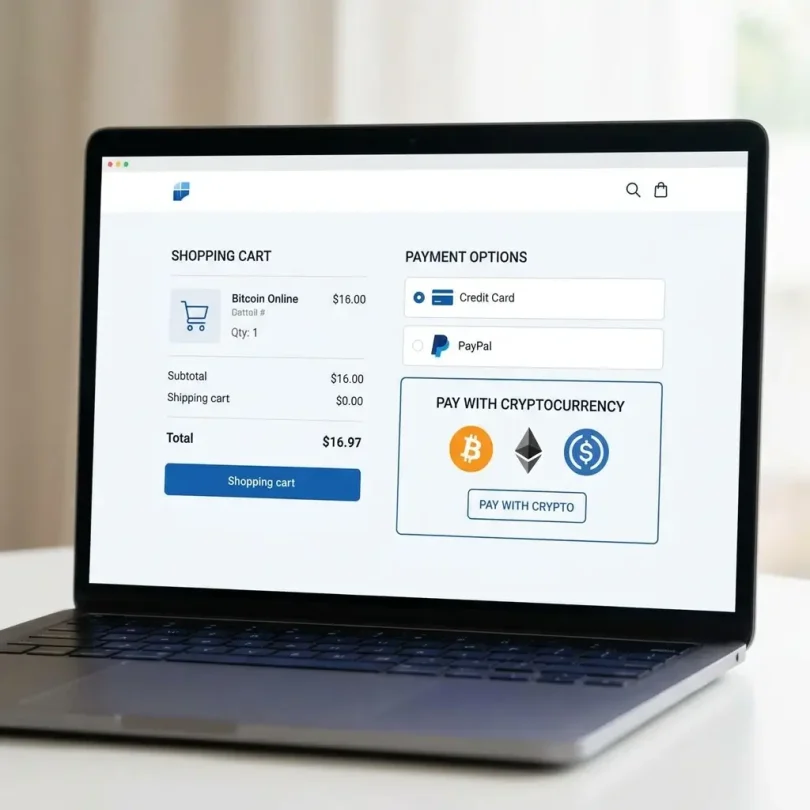

Online businesses are always looking for faster, cheaper, and more global payment methods. Credit cards, PayPal, bank transfers, and local payment methods are still important, but many merchants are now exploring crypto payments as an additional checkout option.
A crypto payment gateway lets a business accept Bitcoin, Ethereum, stablecoins, and other cryptocurrencies from customers. Some gateways allow merchants to receive crypto directly. Others convert crypto into fiat currency such as USD, EUR, or GBP and settle it to a bank account. Some focus on small eCommerce stores, while others are built for enterprise payments, B2B invoices, subscriptions, SaaS, gaming, digital products, marketplaces, and global payouts.
The biggest benefit is flexibility.
A customer may pay with Bitcoin, USDT, USDC, Ethereum, Litecoin, Solana, or another supported asset. The merchant may choose to receive crypto, stablecoins, or fiat settlement. This can help businesses reach crypto users, international customers, freelancers, high-risk but legal industries, digital services, and global buyers who prefer blockchain payments.
But crypto payments also have risks.
Transactions can be irreversible. Network fees can change. Refunds need a clear process. Compliance requirements vary by region. Some gateways are custodial, some are non-custodial, and some require merchant verification. Businesses also need to understand volatility, settlement speed, accounting, taxes, fraud prevention, and customer support.
CoinGate’s 2026 guide explains that managed crypto payment gateways like CoinGate and BitPay can allow customers to pay in crypto while the merchant receives fiat settlement such as EUR, USD, or GBP, reducing exposure to crypto price volatility.
This guide compares the best crypto payment gateways for online businesses, explains how they work, and helps merchants choose the right option for eCommerce, invoices, SaaS, digital products, and international payments.
Important Disclaimer
This article is for educational and informational purposes only. It is not financial, legal, tax, accounting, compliance, or business advice. Crypto regulations, payment rules, tax treatment, and merchant availability vary by country. Always consult qualified legal, tax, and payment professionals before accepting cryptocurrency payments.
What Is a Crypto Payment Gateway?
A crypto payment gateway is a payment processing service that allows businesses to accept cryptocurrency payments from customers.
A crypto payment gateway may handle:
- Payment address generation
- QR code checkout
- Crypto invoice creation
- Blockchain payment confirmation
- Exchange-rate locking
- Fiat conversion
- Stablecoin settlement
- Merchant dashboard
- Refund tools
- API integration
- eCommerce plugins
- Payment buttons
- Subscription payments
- Mass payouts
- Accounting exports
- Compliance checks
CoinGate defines a crypto payment gateway as a service that lets businesses accept crypto payments online and handles payment processing, confirmations, exchange rates, and settlements so merchants can accept crypto more like card or bank payments.
A payment gateway is different from a normal wallet. A wallet only lets you send and receive crypto. A gateway adds checkout, invoice, settlement, integration, accounting, and merchant tools.
Why Businesses Accept Crypto Payments
Businesses may accept crypto payments for several reasons.
1. Global Customer Reach
Crypto can allow customers from many countries to pay without relying only on cards or local banks.
2. Lower Processing Costs
Some crypto payment processors charge lower fees than traditional card processors. BitPay says crypto payment processor fees are typically less than half of credit card processing costs.
3. No Traditional Chargebacks
Blockchain payments are generally irreversible. This can reduce chargeback fraud, but it also means merchants need clear refund policies.
4. Stablecoin Payments
Stablecoins such as USDT and USDC can reduce volatility compared with Bitcoin or altcoins.
5. Faster Cross-Border Payments
Crypto and stablecoins can be useful for international payments, especially when bank transfers are slow or expensive.
6. Customer Preference
Some crypto users prefer paying with digital assets.
7. B2B Payments
Crypto invoices can be useful for freelancers, agencies, SaaS companies, exporters, and international contractors.
8. Alternative Payment Option
Crypto does not need to replace cards. It can simply be an extra checkout method.
Crypto Payment Gateway vs Crypto Wallet
A wallet and a gateway are not the same.
| Feature | Crypto Wallet | Crypto Payment Gateway |
|---|---|---|
| Basic receiving address | Yes | Yes |
| Checkout page | Usually no | Yes |
| Invoice system | Usually no | Yes |
| Fiat conversion | Usually no | Often yes |
| Bank settlement | No | Often yes |
| eCommerce plugins | Limited | Yes |
| Accounting reports | Limited | Often yes |
| Refund tools | Manual | Often yes |
| Merchant dashboard | No | Yes |
| API support | Limited | Yes |
A wallet may be enough for a freelancer receiving occasional payments. An online business usually needs a payment gateway.
Best Crypto Payment Gateways for Online Businesses
Below are some of the best crypto payment gateways to compare in 2026.
1. BitPay
Best for: Established businesses, fiat settlement, enterprise crypto payments
Good for: eCommerce, invoices, B2B payments, global merchants
Main strength: Mature crypto payment processing and fiat settlement
BitPay is one of the oldest and most recognized crypto payment processors. It helps businesses accept crypto payments and send payouts globally.
BitPay’s business page highlights common merchant pain points such as high transaction fees, chargebacks, crypto complexity, and limited global reach. It says merchants can receive crypto payments and settle in fiat without needing wallets or exposure to market volatility.
Key Features
- Crypto payment processing
- Fiat settlement
- Crypto settlement
- B2B invoices
- eCommerce payments
- Merchant dashboard
- Payment buttons
- Email billing
- Payouts, payroll, and remittance tools
- API support
- Refund support
- Multi-currency support
- Compliance-focused merchant onboarding
Why BitPay Is Good
BitPay is strong for businesses that want crypto payment acceptance without becoming crypto experts. A merchant can accept crypto from customers and settle in fiat currency, reducing volatility risk.
This is especially useful for online stores that want crypto as a checkout option but still need predictable accounting in USD, EUR, or another fiat currency.
Fees
BitPay has a tiered pricing model based on a merchant’s cumulative month-to-date paid invoice value. Its pricing page states that payment processing rates are based on month-to-date paid invoices.
Businesses should check the current BitPay pricing page before integrating because transaction rates, payout fees, and service fees may vary by volume and product.
Best Fit
BitPay is best for established businesses that want a trusted crypto payment processor with fiat settlement, invoicing, and merchant tools.
Possible Downsides
BitPay may require merchant verification and compliance review. It may also support fewer coins than some altcoin-focused gateways. Businesses should compare settlement countries, supported assets, and fees before setup.
2. Coinbase Business / Coinbase Commerce
Best for: Coinbase ecosystem and business crypto payments
Good for: Businesses that already use Coinbase services
Main strength: Recognized crypto brand and business payment infrastructure
Coinbase has offered crypto payment services through Coinbase Commerce and broader Coinbase Business products. Coinbase Business is described as an all-in-one crypto financial platform for businesses to accept and send payments globally, trade, and securely store digital assets.
Coinbase also has business relevance in stablecoin payments. Reuters reported that Coinbase waived fees on transactions connected to PayPal’s PYUSD stablecoin and allowed direct U.S. dollar redemption as part of a push to expand stablecoin use in payments.
Key Features
- Business crypto payments
- Global send and receive payments
- Stablecoin support in Coinbase ecosystem
- Crypto trading
- Custody options
- Business dashboard
- Coinbase brand recognition
- Payment infrastructure
- API and business services
Why Coinbase Is Good
Coinbase is a strong option for businesses that already use Coinbase or want a recognizable U.S.-based crypto brand. It may be useful for merchants who want crypto payments connected to business crypto accounts, trading, and custody services.
Stablecoins are also becoming more important for business payments because they reduce volatility compared with Bitcoin and altcoins.
Important Note
Coinbase Commerce has changed over time, and merchants should verify current availability, migration requirements, supported coins, and business payment setup directly with Coinbase before integration. The broader Coinbase Business page now positions Coinbase as a business crypto platform for accepting and sending payments globally.
Best Fit
Coinbase Business is best for companies already using Coinbase or looking for a recognized crypto business platform.
Possible Downsides
Product names, features, and availability can change. Businesses should verify whether Coinbase’s current payment product fits their checkout, settlement, and country requirements.
3. NOWPayments
Best for: Large coin selection and low starting fees
Good for: Small businesses, WooCommerce stores, digital products, global merchants
Main strength: 350+ supported currencies and simple fee model
NOWPayments is a popular crypto payment gateway for businesses that want to accept many cryptocurrencies. Its pricing page says the service fee is 0.5% for payments without exchange and 1% for multi-currency payments with conversion. It also highlights 350+ currencies, 5-minute average transaction time, and 24/7 support.
Key Features
- 350+ cryptocurrencies
- 0.5% service fee without exchange
- 1% fee with conversion
- Payment buttons
- Crypto invoices
- API integration
- WooCommerce plugin
- Donation tools
- Mass payouts
- Custodial and conversion workflows
- Auto coin conversion
- Global availability
Why NOWPayments Is Good
NOWPayments is strong for businesses that want broad coin support. If your customers want to pay with Bitcoin, Ethereum, USDT, Litecoin, Dogecoin, Solana, or many other coins, NOWPayments gives more flexibility than gateways with limited supported assets.
It can also be attractive for WooCommerce users. The WooCommerce plugin page says NOWPayments for WooCommerce allows stores to accept Bitcoin, Ethereum, USDT, and 300+ digital currencies at checkout.
Fees
NOWPayments’ official pricing states:
- 0.5% service fee for payments without exchange
- 1% for multi-currency payments with conversion
- 350+ currencies
- 5-minute average transaction time
Best Fit
NOWPayments is best for small-to-mid-size businesses, WooCommerce stores, donation websites, digital product sellers, and merchants that want broad crypto support.
Possible Downsides
Merchants should check conversion fees, payout methods, settlement options, refund workflows, and compliance requirements. A low processing fee may not be the full cost if conversion, network, or payout fees apply.
4. CoinGate
Best for: eCommerce stores needing fiat settlement and crypto checkout
Good for: Online shops, European merchants, WooCommerce, Magento, PrestaShop
Main strength: Managed crypto checkout with settlement options
CoinGate is a licensed crypto payment gateway for businesses. It handles payment processing, confirmations, exchange rates, and settlements for merchants.
CoinGate’s 2026 gateway comparison explains that managed gateways like CoinGate and BitPay can let customers pay in crypto while merchants receive fiat settlement such as EUR, USD, or GBP, helping reduce volatility risk.
Key Features
- Crypto payment gateway
- Fiat settlement
- Crypto settlement
- eCommerce plugins
- Payment buttons
- Invoices
- API integration
- Merchant dashboard
- Refund tools
- Exchange-rate locking
- Multiple cryptocurrencies
- European merchant support
Why CoinGate Is Good
CoinGate is useful for merchants who want crypto checkout without holding volatile crypto. The customer can pay in crypto, while the business can settle in fiat.
This is especially useful for businesses with accounting needs, payroll obligations, supplier payments, and fiat-based expenses.
Best Fit
CoinGate is best for online stores that want managed crypto payment processing with fiat settlement options.
Possible Downsides
Merchants should verify country availability, payout currencies, bank settlement timelines, supported plugins, and total fees before going live.
5. BTCPay Server
Best for: Self-hosted Bitcoin payments and maximum control
Good for: Bitcoin-focused merchants, privacy-focused businesses, technical users
Main strength: Open-source, self-hosted payment processing
BTCPay Server is different from managed gateways like BitPay, CoinGate, or NOWPayments. It is an open-source, self-hosted crypto payment processor that allows merchants to accept Bitcoin and other supported payments without relying on a third-party payment processor.
Key Features
- Self-hosted payment processor
- Open-source software
- Bitcoin payment support
- Lightning Network support depending on setup
- No processor transaction fee
- Merchant-controlled infrastructure
- Direct wallet settlement
- Payment invoices
- WooCommerce integration
- Privacy-focused design
- Technical flexibility
Why BTCPay Server Is Good
BTCPay Server is ideal for merchants who want control and do not want a custodial processor. It can be powerful for Bitcoin-focused businesses, privacy-conscious sellers, and technical teams.
Because it is self-hosted, there may be no payment processor percentage fee, but the merchant must handle hosting, setup, maintenance, wallet management, and operational risk.
Best Fit
BTCPay Server is best for technical merchants who want self-hosted Bitcoin payment processing and direct control.
Possible Downsides
It is not beginner-friendly compared with managed gateways. Businesses need technical skill, server maintenance, security knowledge, and accounting processes.
6. CoinPayments
Best for: Multi-coin merchant checkout
Good for: Merchants wanting broad altcoin acceptance
Main strength: Large selection of supported cryptocurrencies
CoinPayments is a long-running crypto payment processor known for supporting many cryptocurrencies and merchant tools.
Key Features
- Multi-coin crypto payments
- Merchant checkout
- Payment buttons
- Shopping cart plugins
- API integration
- Wallet services
- Invoice tools
- Auto conversion features
- Global merchant support
Why CoinPayments Is Good
CoinPayments can be useful for merchants who want to accept a wide range of cryptocurrencies rather than only Bitcoin and Ethereum.
It is often compared by businesses that want simple crypto checkout and many altcoin options.
Best Fit
CoinPayments is best for merchants that want broad crypto support and basic online checkout tools.
Possible Downsides
Businesses should carefully check supported countries, custody model, current fees, customer reviews, payout methods, and compliance requirements.
7. Crypto.com Pay
Best for: Crypto.com ecosystem users and consumer checkout
Good for: Mobile crypto users, eCommerce merchants, crypto-native customers
Main strength: Consumer ecosystem and app-based payment flow
Crypto.com Pay is a payment solution connected to the Crypto.com ecosystem. It can be useful for merchants whose customers already use Crypto.com services.
Key Features
- Crypto payment checkout
- Crypto.com app ecosystem
- Merchant payment tools
- QR-style payments
- Online checkout
- Potential cashback or promotional features depending on region
- Supported crypto assets
- Merchant dashboard
Why Crypto.com Pay Is Good
Crypto.com has a large consumer-facing crypto app ecosystem. For merchants targeting crypto users, an app-based payment experience can be convenient.
It may be useful for online merchants, crypto-native brands, and businesses with customers who already use Crypto.com.
Best Fit
Crypto.com Pay is best for merchants targeting mobile-first crypto users and Crypto.com customers.
Possible Downsides
Availability, features, and supported regions may vary. Merchants should verify current setup, settlement, fees, and integration options.
8. Binance Pay
Best for: Binance users and crypto-native global payments
Good for: Binance ecosystem merchants, peer-to-peer payments, crypto users
Main strength: Large Binance user base and crypto payment ecosystem
Binance Pay is a payment solution within the Binance ecosystem. It allows users to pay and receive crypto payments where supported.
Key Features
- Crypto payments
- Binance user ecosystem
- Merchant tools
- QR payments
- Online and offline use cases
- Multiple crypto assets
- App-based experience
- Global crypto audience
Why Binance Pay Is Good
Binance has a very large global user base. For merchants in regions where Binance Pay is supported, it can be useful for reaching crypto-native customers.
It may be especially relevant for businesses with customers who already hold crypto inside Binance accounts.
Best Fit
Binance Pay is best for merchants targeting Binance users and crypto-native global customers.
Possible Downsides
Regulatory availability varies by country. Merchants must confirm that Binance Pay is allowed and supported in their region.
9. Triple-A
Best for: Licensed crypto payments and enterprise-grade compliance
Good for: Global businesses, regulated industries, payment teams
Main strength: Compliance-focused crypto payment infrastructure
Triple-A is a crypto payment gateway that focuses on business payment needs and compliance. Its 2026 blog on crypto payment gateways emphasizes that modern gateway selection now involves licensing, settlement models, and real-world use cases, not just adding a Bitcoin button.
Key Features
- Crypto payment acceptance
- Fiat and stablecoin settlement options
- Business payment infrastructure
- Compliance-focused setup
- Enterprise merchant tools
- Global payment use cases
- API integration
- Payment processing
Why Triple-A Is Good
Triple-A may be attractive for businesses that care deeply about regulation, licensing, settlement structure, and compliance. This matters for companies with serious finance teams, cross-border operations, or higher payment volumes.
Best Fit
Triple-A is best for businesses that want a more compliance-focused crypto payment provider.
Possible Downsides
It may be more enterprise-oriented than a simple plugin solution for small stores. Businesses should compare onboarding requirements, supported countries, fees, and settlement options.
10. BVNK
Best for: B2B crypto and stablecoin payment infrastructure
Good for: Enterprise payments, global businesses, payment operations teams
Main strength: Crypto payment processing plus stablecoin and fiat rails
BVNK is often positioned as a payment infrastructure platform for businesses using stablecoins and digital assets. A 2026 review described BVNK as strong for B2B portals and as a bridge between crypto payment processing and banking-style payment infrastructure.
Key Features
- Business payment infrastructure
- Stablecoin payment support
- Crypto payments
- Fiat settlement tools
- B2B payment workflows
- Enterprise-grade payment operations
- API integrations
- Global payment use cases
Why BVNK Is Good
BVNK can be useful for businesses that need more than a simple crypto checkout button. It may fit companies handling cross-border payments, B2B invoices, stablecoin settlement, and payment operations.
Best Fit
BVNK is best for larger businesses, SaaS companies, fintechs, marketplaces, and B2B merchants that need crypto/stablecoin payment infrastructure.
Possible Downsides
It may be too advanced for small blogs or simple WooCommerce stores. Smaller merchants may prefer BitPay, CoinGate, NOWPayments, or BTCPay Server.
Quick Comparison Table
| Gateway | Best For | Main Strength | Best Business Type |
|---|---|---|---|
| BitPay | Established businesses | Fiat settlement and mature processing | eCommerce/B2B |
| Coinbase Business | Coinbase ecosystem | Recognized crypto business platform | Coinbase users |
| NOWPayments | Broad coin support | 350+ currencies and low starting fee | Small stores/digital products |
| CoinGate | Managed checkout | Fiat settlement and plugins | Online shops |
| BTCPay Server | Self-hosted Bitcoin | Open-source, merchant control | Technical Bitcoin merchants |
| CoinPayments | Multi-coin checkout | Broad altcoin support | Altcoin-friendly merchants |
| Crypto.com Pay | App ecosystem | Mobile crypto users | Crypto-native brands |
| Binance Pay | Binance users | Large exchange ecosystem | Global crypto merchants |
| Triple-A | Compliance-focused | Licensed payment infrastructure | Regulated businesses |
| BVNK | B2B payments | Stablecoin + payment infrastructure | Enterprise/B2B |
Best Crypto Payment Gateway by Business Type
Best for Small Online Stores
NOWPayments, CoinGate, BitPay
These gateways provide checkout tools, invoices, and plugins that can work for online merchants.
Best for WooCommerce
NOWPayments, CoinGate, BitPay, BTCPay Server
WooCommerce stores should compare plugin quality, settlement options, coin support, and refund workflows.
Best for Bitcoin-Only Businesses
BTCPay Server, BitPay
BTCPay is ideal for self-hosted Bitcoin payments. BitPay is better for managed processing.
Best for Stablecoin Payments
Coinbase Business, BVNK, Triple-A, NOWPayments
Stablecoins can be useful for businesses that want lower volatility than Bitcoin.
Best for B2B Invoices
BitPay, BVNK, Triple-A, NOWPayments
B2B businesses need invoicing, settlement, and accounting support.
Best for Enterprise Payments
BVNK, Triple-A, BitPay
Enterprise businesses should prioritize compliance, settlement, reporting, and API reliability.
Best for Maximum Control
BTCPay Server
Self-hosted tools give more control but require technical responsibility.
Crypto Payment Gateway Fees
Crypto payment gateway fees vary widely.
Common fees include:
- Payment processing fee
- Conversion fee
- Network fee
- Withdrawal fee
- Fiat settlement fee
- Bank wire fee
- Refund fee
- Chargeback-like admin fee, where applicable
- Monthly subscription fee
- API or enterprise fee
- Minimum payout fee
NOWPayments says its service fee is 0.5% for payments without exchange and 1% for multi-currency payments with conversion. BitPay says its processing rates depend on a merchant’s cumulative month-to-date paid invoice value.
Do not compare only the headline percentage. Calculate the full cost including conversion, settlement, payout, and network costs.
Fiat Settlement vs Crypto Settlement
This is one of the most important decisions.
Fiat Settlement
The customer pays in crypto, but the merchant receives fiat currency.
Best for:
- Businesses with fiat expenses
- Accounting simplicity
- Avoiding volatility
- Payroll and supplier payments
- Tax reporting clarity
- Traditional businesses
Crypto Settlement
The merchant receives crypto directly.
Best for:
- Crypto-native businesses
- Long-term crypto holders
- Web3 companies
- Businesses paying crypto suppliers
- Stablecoin treasury strategies
- Merchants with crypto accounting support
CoinGate’s guide explains that managed gateways can convert crypto payments into fiat at a locked exchange rate and settle to the merchant’s bank account, helping the merchant avoid price volatility risk.
For most traditional businesses, fiat settlement is easier. For crypto-native companies, stablecoin or crypto settlement may be useful.
Supported Coins: What Should Merchants Accept?
Businesses do not need to accept every coin.
Common crypto payment options include:
- Bitcoin
- Ethereum
- USDT
- USDC
- Litecoin
- Dogecoin
- Solana
- Polygon
- BNB
- XRP, where supported
- Stablecoins on low-fee networks
For businesses, stablecoins often make more sense than volatile coins because pricing stays closer to fiat value.
USDT and USDC are especially common for international payments. However, supported networks matter. USDT on Ethereum, Tron, Polygon, BNB Chain, and other networks can have different fees and confirmation times.
Crypto Payment Gateway Integrations
Before choosing a gateway, check integrations.
Common integrations include:
- WooCommerce
- Shopify, where supported
- Magento
- PrestaShop
- WHMCS
- OpenCart
- BigCommerce
- Custom API
- Payment buttons
- Hosted checkout pages
- Email invoices
- POS tools
- Donation widgets
A simple blog or digital product site may only need a payment button. A serious eCommerce store needs plugin reliability, order status updates, refund handling, and accounting exports.
Chargebacks, Refunds, and Fraud
Crypto payments are usually irreversible. That can reduce traditional chargeback fraud, but it creates a different responsibility.
Merchants should create clear policies for:
- Refund eligibility
- Refund currency
- Refund exchange rate
- Overpayments
- Underpayments
- Delayed confirmations
- Wrong network payments
- Duplicate payments
- Customer wallet mistakes
- Order cancellation
- Failed checkout
BitPay says blockchain payments are irreversible and frames this as a solution to chargebacks and fraud for merchants.
But merchants should not treat “no chargebacks” as no responsibility. Good customer service still matters.
Crypto Payment Compliance
Crypto payments can involve compliance requirements.
Businesses may need to consider:
- KYC requirements
- AML screening
- Sanctions rules
- Restricted countries
- Tax reporting
- Consumer protection laws
- Refund policy laws
- Accounting rules
- Data privacy
- Payment licensing
- Industry restrictions
- Recordkeeping
Crypto payment gateways may have their own merchant approval process. Some businesses may be rejected depending on industry, country, product type, or risk level.
Always check legal requirements in your operating country and customer markets.
Accounting and Tax Records for Crypto Payments
Every crypto payment should be recorded properly.
Businesses should track:
- Invoice number
- Customer payment amount
- Crypto received
- Fiat value at payment time
- Settlement currency
- Exchange rate
- Transaction hash
- Network fee
- Gateway fee
- Conversion fee
- Refunds
- Payout date
- Bank settlement amount
- Customer order ID
- Tax/VAT/GST status
If the business receives crypto instead of fiat, later price changes may create additional accounting or tax consequences.
A fiat-settlement gateway can simplify records because the business books revenue in fiat. But the gateway reports still need to be saved.
Security Tips for Accepting Crypto Payments
Businesses should follow these rules:
- Use official plugins only
- Keep plugins updated
- Use strong admin passwords
- Enable two-factor authentication
- Limit staff access
- Never expose private keys
- Use separate business wallets
- Use hardware wallets for treasury crypto
- Review settlement addresses
- Test checkout before launch
- Use webhook signing where available
- Monitor failed payments
- Keep API keys secure
- Avoid fake gateway clones
- Reconcile payments daily or weekly
A payment gateway helps, but business security still matters.
How to Choose the Best Crypto Payment Gateway
Use this checklist:
- Does it support your country?
- Does it support your business type?
- What coins are supported?
- Can you receive fiat settlement?
- Can you receive stablecoin settlement?
- What are all fees?
- Are there payout fees?
- How fast is settlement?
- Does it integrate with your store?
- Does it support refunds?
- Does it provide invoices?
- Does it support accounting exports?
- Does it offer API documentation?
- Does it require KYC?
- Does it support your customer countries?
- Is customer support reliable?
- Does it support recurring payments if needed?
- Is the custody model clear?
- Does it have good merchant reviews?
Choose based on your business model, not only the lowest advertised fee.
Common Mistakes Businesses Make
Mistake 1: Accepting Too Many Coins
More coins can create more complexity. Start with Bitcoin and stablecoins if unsure.
Mistake 2: Ignoring Volatility
If you price products in fiat, consider fiat or stablecoin settlement.
Mistake 3: Not Testing Checkout
Always test payments before announcing crypto checkout.
Mistake 4: Forgetting Refund Rules
Crypto refunds are not as simple as card refunds.
Mistake 5: Not Saving Records
Crypto payments need clear accounting records.
Mistake 6: Using Unsafe Plugins
Fake or outdated plugins can create security risks.
Mistake 7: Not Checking Country Restrictions
Some gateways or coins may not be available in your region.
Mistake 8: Assuming No Chargebacks Means No Risk
Irreversible payments reduce chargebacks but increase customer support responsibility.
Final Verdict: What Is the Best Crypto Payment Gateway?
The best crypto payment gateway depends on your business type.
For most businesses:
- Best established processor: BitPay
- Best Coinbase ecosystem option: Coinbase Business
- Best low-fee broad-coin option: NOWPayments
- Best managed eCommerce gateway: CoinGate
- Best self-hosted Bitcoin option: BTCPay Server
- Best broad altcoin checkout: CoinPayments
- Best app-based crypto ecosystem: Crypto.com Pay
- Best Binance user payments: Binance Pay
- Best compliance-focused gateway: Triple-A
- Best B2B stablecoin infrastructure: BVNK
If you run a small WooCommerce store, compare NOWPayments, CoinGate, BitPay, and BTCPay Server. If you run a larger business, compare BitPay, Triple-A, BVNK, and Coinbase Business. If you want full control and have technical skills, BTCPay Server is powerful. If you want simple settlement and less volatility, choose a managed gateway with fiat or stablecoin settlement.
Crypto payments can help online businesses reach global customers, reduce some payment friction, and add a modern checkout option. But success depends on choosing the right gateway, setting clear refund rules, keeping records, and understanding compliance.
FAQs About Crypto Payment Gateways
What is a crypto payment gateway?
A crypto payment gateway is a service that lets businesses accept cryptocurrency payments online. It handles payment processing, confirmations, exchange rates, and settlements.
What is the best crypto payment gateway?
The best crypto payment gateway depends on your business. BitPay is strong for established merchants, NOWPayments is strong for broad coin support, CoinGate is good for managed checkout, BTCPay Server is best for self-hosted Bitcoin payments, and BVNK is strong for B2B stablecoin infrastructure.
Can I accept crypto and receive fiat?
Yes. Managed gateways such as CoinGate and BitPay can allow customers to pay in crypto while merchants receive fiat settlement, reducing volatility risk.
Are crypto payment gateways cheaper than credit cards?
They can be cheaper, but it depends on fees, conversion, settlement, and payout costs. BitPay says crypto payment processor fees are typically less than half of credit card processing costs.
What fees does NOWPayments charge?
NOWPayments says its service fee is 0.5% for payments without exchange and 1% for payments with conversion. It also lists 350+ supported currencies.
Is BitPay good for businesses?
BitPay is a strong option for businesses that want established crypto payment processing, fiat settlement, invoices, and merchant tools. Its business page says merchants can receive crypto payments and settle in fiat without wallets or exposure to market volatility.
Is BTCPay Server free?
BTCPay Server is open-source and self-hosted, so there is no traditional processor percentage fee. However, merchants must handle hosting, setup, maintenance, and network fees.
Should online businesses accept Bitcoin or stablecoins?
Many businesses accept both. Bitcoin is widely recognized, while stablecoins such as USDT and USDC can reduce volatility and may be better for business accounting.
Are crypto payments reversible?
Blockchain payments are generally irreversible. This can reduce chargebacks, but businesses still need clear refund and customer support policies.
Do crypto payments create tax records?
Yes. Businesses should record invoice value, crypto amount, fiat value, fees, settlement amount, transaction hash, and refund details. Crypto tax and accounting rules vary by country.